
I've been writing a lot over at The Focus AI about how I'm actually using AI day-to-day, and three recent pieces have kind of converged into a single idea that I want to pull together here. The short version: I don't really build "apps" anymore. I build habitats for agents.
The three pieces
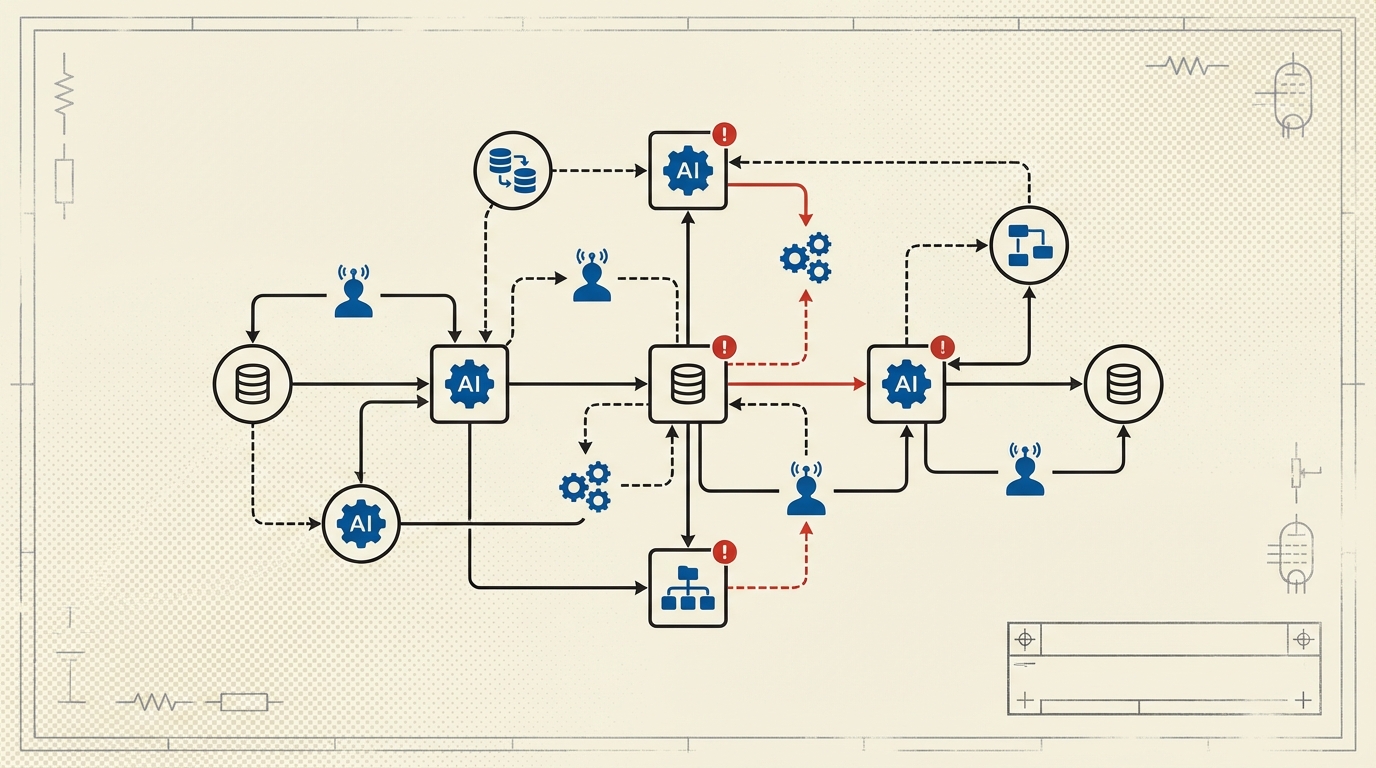
Claude Code, not Code was about how Claude Code isn't really a coding tool – it's a workflow orchestrator. I use it to manage hiring pipelines, track my health data, draft newsletters, automate grocery shopping. The key insight was: don't just ask Claude to do things, ask it to document how it did them so it can do them again.
The Data Flywheel Pattern described the architecture that keeps emerging: drop data into a folder, let AI parse it, build views on top, and the outputs become inputs for the next cycle. No schema design. No migrations. The app emerges from the data.
The Agent Habitat tied it together with a concrete model. An agent isn't just automation with LLM calls. It carries state, accumulates memory, and makes bounded decisions under uncertainty – and a git repo is where all of that lives.
What I actually do now
I have about half a dozen of these "habitats" running. A Twitter feed tracker that fetches tweets, summarizes threads, and flags things I should respond to. A YouTube transcript summarizer. A newsletter aggregator. An operations briefing system that pulls commits across client repos and generates weekly status reports.
Each one is a git repo. Each one has a CLAUDE.md that serves as the
agent's long-term memory. Each one has a prompts/ directory with
playbooks, a data/ directory with working state, and a scripts/
directory with the hardened automation.
The pattern is always the same four stages:
- Conversation – I work interactively with Claude, figuring out the API, the edge cases, what I actually want.
- Prompt – I extract what I learned into a markdown file in
prompts/. This is the agent's playbook. - Optimization – I separate the deterministic work (bash scripts) from the judgment work (LLM calls). The mechanical stuff gets downgraded to cheaper models.
- Automation – Cron job. No human in the loop.
This is basically what I described in Living in mktemp and git taken to its logical conclusion. That article was about treating your laptop as a cache. This is the same idea, but for your workflows. The repo is the source of truth. The machine it runs on is disposable.
The data flywheel in practice
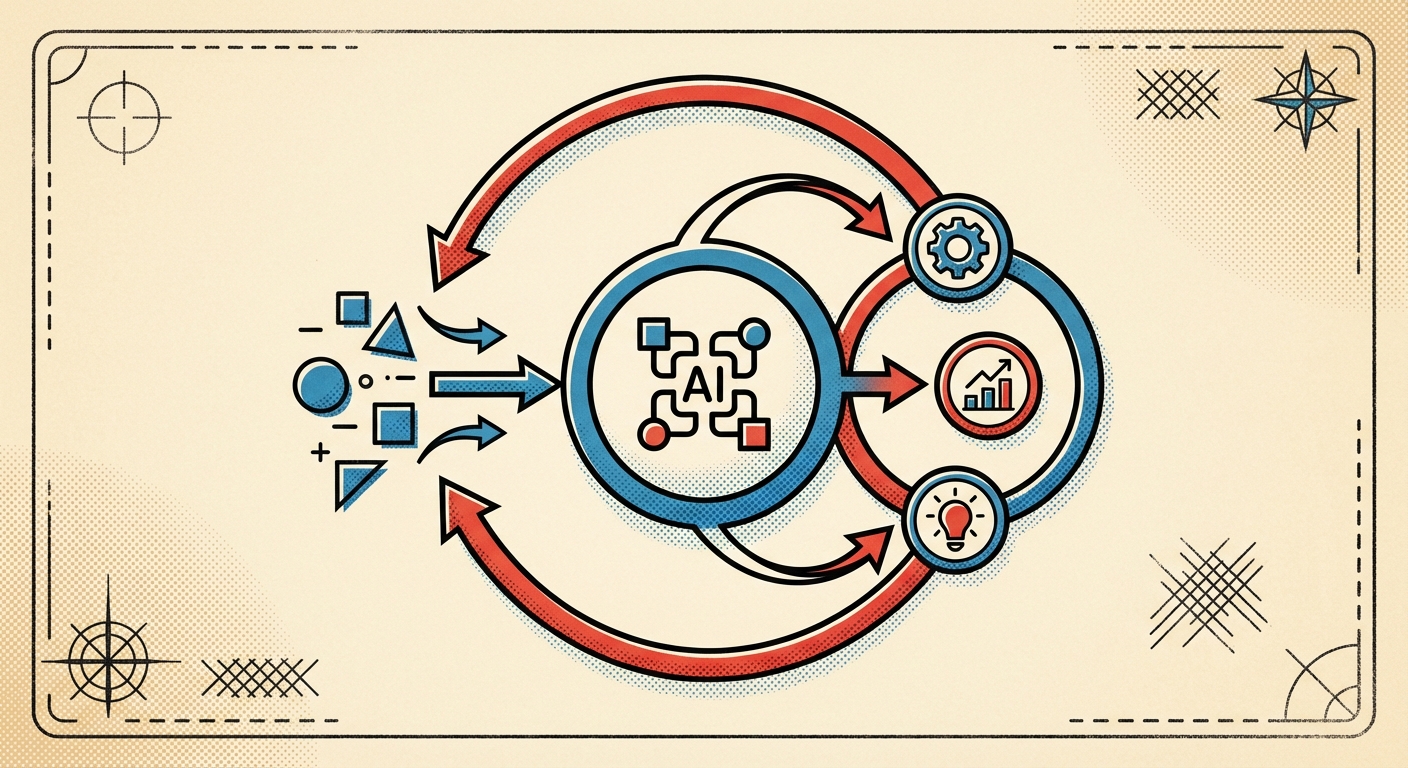
The traditional way to build something: design a schema, build CRUD endpoints, create a UI, maintain consistency across all of it. The new way: throw data at a folder and let AI figure it out.
I built a fasting tracker in 90 minutes. It pulls sleep data from Oura, parses DEXA scans, extracts bloodwork from lab exports, and generates meal plans. Each new data source I added triggered new features – I didn't plan them, they just emerged. "Oh you have body composition data now? Here's how that correlates with your sleep scores."
The ops tracker for The Focus AI does the same thing. It syncs
with GitHub, extracts data from client contracts (PDFs), processes job
applications from email, and rolls it all into a dashboard. Running
/sync-with-github pulls commits across all repositories and
synthesizes changes into weekly reports.
None of this required designing a database. The data/ directory IS
the database. Git gives you version history. The AI gives you the
query layer.
The back office that runs on six commands
The biggest example of all of this coming together is the back office I built for The Focus AI. We're a consultancy – we have clients, invoices, candidates, a sales pipeline, meeting notes. The kind of stuff that normally lives in five different SaaS tools.
Instead, it's a git repo with markdown files. Six commands run everything:
/sync | Pull data from GitHub, meetings, email, newsletters |
/daily | Morning briefing across all sources |
/weekly | Full operational review + dashboard |
/client-update | Draft branded status emails per client |
/talent-search | Search evaluated candidates by skills |
/push | Commit and sync changes |
The file structure is simple:
| |
/daily synthesizes project files, commits, meeting transcripts,
outstanding invoices, and task backlogs to surface what actually needs
attention. /client-update [client] reads the project status,
invoices, and meeting history and drafts a branded HTML email – what
used to take 30 minutes is now a few seconds of review.
We processed 50 job candidates in a weekend. Applications come in via email, get parsed into evaluations that include GitHub research and portfolio assessment, and personalized responses get drafted automatically. All 50 become a searchable talent pool.
invoices.md is a markdown table. That's the accounting system.
/weekly calculates cash flow trends from it. No spreadsheet
formulas.
The whole thing took 2 hours to set up and 4 days to integrate with our actual data sources. It saves us 10+ hours a week. And because it's markdown files in git, there's no vendor lock-in, no subscription, no migration if we want to change how it works. We just edit the files.
Why git is the right substrate
I keep coming back to git for this because it gives you three things that matter for agents:
Version history – You know what changed and when. When an agent rewrites a date parser and breaks something downstream (this happened to me), you can see exactly what it did and roll back.
Credential isolation – Each repo gets its own .env with scoped
API keys. If one agent gets compromised, the blast radius is
contained to that one service.
Audit trail – Self-modifying agents are powerful and dangerous in roughly equal measure. Git diffs are how you catch drift.
I run all of this inside Docker containers via Dagger, so agents can't access the host machine or each other's secrets. Three layers: Docker isolation, scoped credentials, git audit trail.
The documentation loop
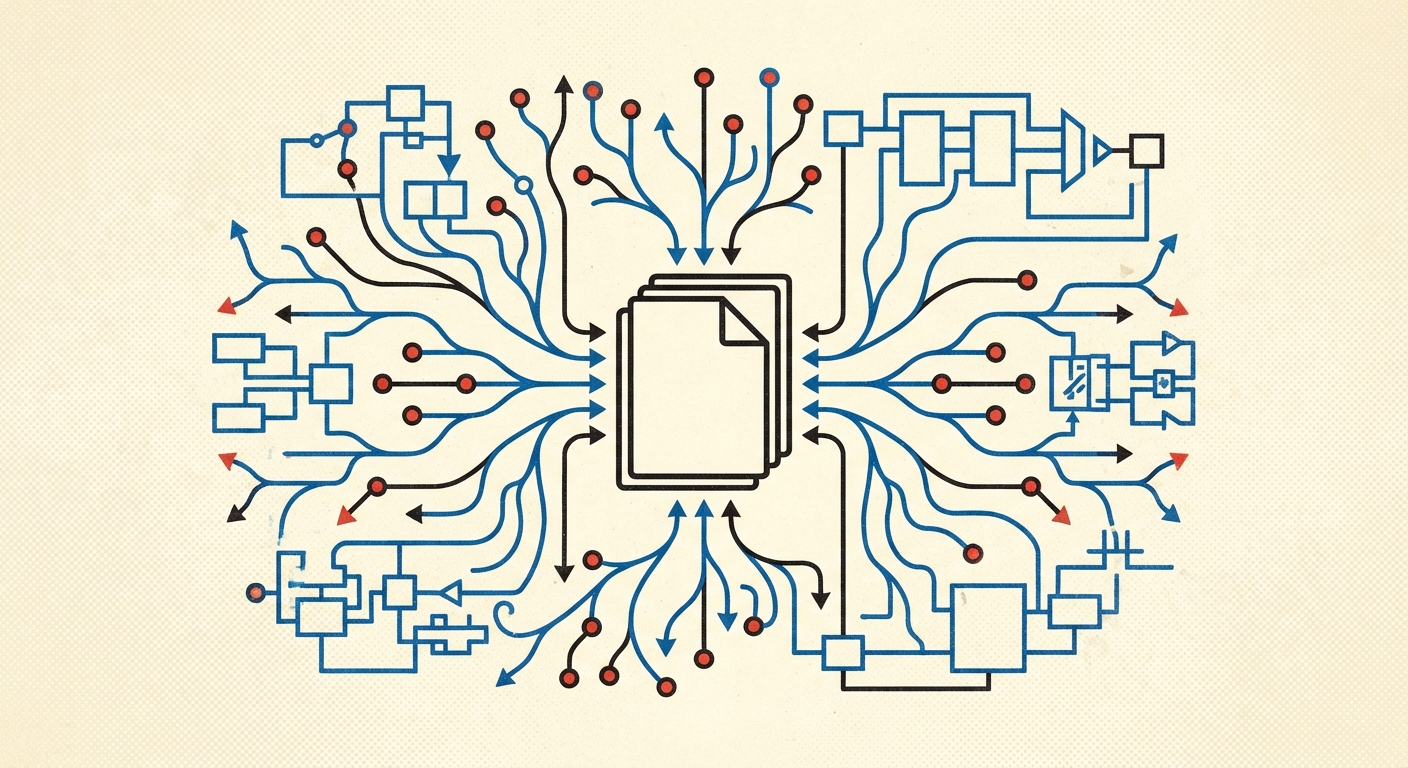
The thing that makes all of this work is CLAUDE.md. It's the
agent's memory. When I work with Claude interactively and figure out
something new – an API quirk, a parsing strategy, a rate limit
workaround – I say "update CLAUDE.md with what we learned."
Next time Claude opens that repo, it already knows. The memory
persists across sessions. Over time the CLAUDE.md file becomes a
dense, practical document that captures everything about how to
operate in that domain.
This is the opposite of how most people think about AI. They think "I'll ask it a question and it'll give me an answer." What I'm doing is building up a persistent body of knowledge, scoped to a specific domain, that gets better every time I use it.
You don't deploy agents, you deploy repos
The mental model shift is: stop thinking about building applications. Start thinking about building environments where agents can operate.
A git repo with good documentation, clean data directories, and scoped credentials IS the application. The agent reads the docs, processes the data, and does the work. You don't need a framework. You don't need a platform. You need a repo and a cron job.
I know this sounds too simple. I thought so too, until I realized I have six of these things running and they're handling work that would have taken me hours every week.
The hard part isn't the technology. It's the habit of documenting what you learn as you learn it, so the agent can do it next time without you.